
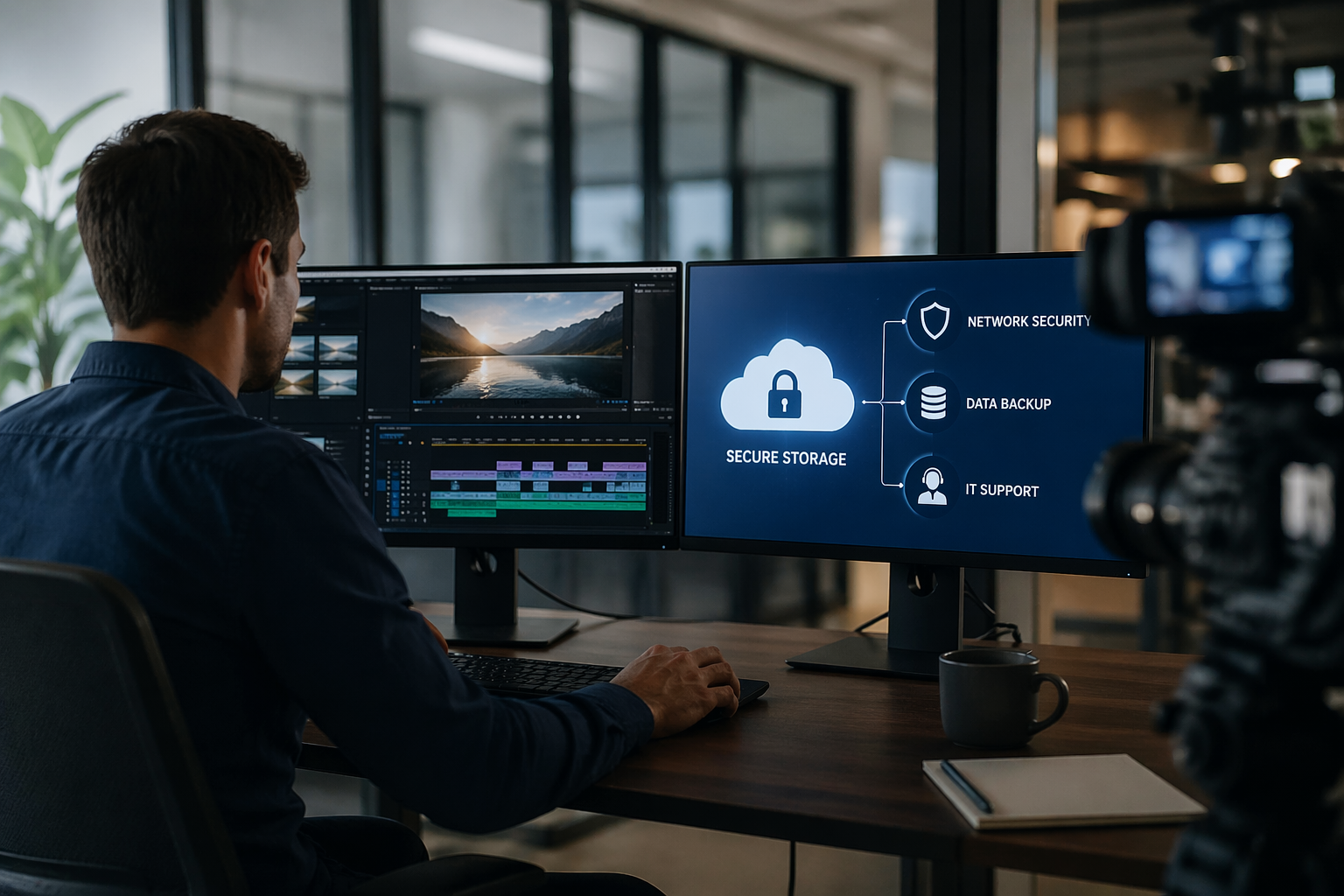
As video production continues to scale across organizations, the conversation is shifting beyond cameras and editing software into something far more foundational: infrastructure.
In regions like Orange County, where businesses rely heavily on digital systems, video content is no longer just created—it is stored, managed, secured, and distributed through interconnected IT environments. This makes IT support, network management, and cybersecurity planning essential components of any modern video workflow.
Video Workflows Depend on Infrastructure More Than Ever
Behind every finished video is a system of storage, transfer, and access. Raw footage, edited files, and archived assets often move across internal networks, cloud platforms, and shared environments before reaching their final destination.
To support this, organizations rely on:
- Business network stability for large file transfers
- Centralized storage environments for collaboration
- Cloud systems for accessibility across teams
- Backup and recovery planning for critical media
Without these elements in place, even the most well-produced video content can become difficult to manage or vulnerable to loss.
The Growing Role of IT Support in Media Operations
Many companies don’t initially associate video production with IT services, yet technical support plays a key role in keeping media workflows operational.
From troubleshooting file access issues to maintaining storage systems and optimizing network performance, IT teams help ensure that video production processes remain efficient and reliable.
This is especially true for organizations using:
- Shared drives or server environments
- Remote collaboration tools
- Internal media libraries or portals
- Live streaming and real-time video delivery
In these environments, consistent IT oversight reduces downtime and improves overall workflow performance.
Data Protection and Security in Video Environments
Video files often contain sensitive business information, including internal communications, training materials, and proprietary content. As a result, they require the same level of protection as other digital assets.
Common security considerations include:
- Controlled access to media files and folders
- Secure transfer protocols during collaboration
- Protection against ransomware and data loss
- Monitoring for unauthorized access or distribution
Cybersecurity strategies that include media systems help organizations avoid unnecessary risk while maintaining control over their content. Organizations looking to better understand structured security frameworks can reference NIST cybersecurity guidelines and frameworks, which outline best practices for protecting digital systems and data.
Backup, Recovery, and Long-Term Media Preservation
Unlike many other file types, video assets are often irreplaceable. A lost training library, corrupted archive, or deleted project file can represent significant time and financial investment.
That’s why backup solutions and disaster recovery planning are critical for media-heavy environments.
Effective strategies typically include:
- Redundant storage across multiple locations
- Scheduled backups of raw and edited footage
- Version control systems to track changes
- Long-term archival planning for future use
These practices ensure that video content remains accessible, even in the event of system failure or unexpected data loss.
Why This Matters for Orange County Businesses
Across Orange County, organizations in industries such as healthcare, construction, education, and professional services are increasingly relying on video for communication and operations.
At the same time, these businesses are investing in IT support providers, network security solutions, data protection systems, and cloud-based infrastructure.
The overlap between these areas is where modern video production truly lives.
Building More Resilient Video Systems
Organizations that succeed with video long-term tend to treat it as part of a larger digital ecosystem.
This includes structured production and editing workflows, reliable infrastructure, strong security practices, and long-term storage planning.
When these elements are aligned, video becomes easier to manage, safer to store, and more effective as a business tool.
Industry Perspective on Video Production Standards
In addition to infrastructure considerations, maintaining high production standards remains essential. Platforms like video production and content creation resources provide useful insights into how professional video is planned, produced, and optimized for modern distribution.
Final Thoughts
Modern video production is no longer isolated from technology systems—it depends on them.
By understanding how infrastructure, IT support, and cybersecurity frameworks influence video workflows, organizations can reduce risk, improve efficiency, and protect the value of their media assets.